
Click a letter below to find a Cofi
A | B | C | D | E | F | G | H | I | J | K | L | M | N | O | P | Q| R | S | T | U | V | W | X | Y | Z
HALL OF FAME

Well done to all who were nominated, and all who were successful!
A panel of six people who are independent of the Caernarfon Online website selected the Top Twenty Hall of Fame from nominations made by members of the public.
In the interest of fairness, we have listed them alphabetically.
|
Footballer |
Davies (Wyn) |
|
|
Ronald Wyn Davies born March 20, 1942 in Caernarfon is a former professional Welsh football player. Davies was the archetypal target man who started his playing career with Wrexham in 1962 before joining Newcastle in 1966. He stayed there until he was head hunted firstly by Manchester City and then Manchester United, but only spending a year at each club. In 1973 he joined Blackpool and was loaned to Crystal Palace before ending his career at Stockport, Crewe and finally Bangor City. During his career he played 611 times and hit the back of the net a respectable 179 times and with his well developed aerial abilities he earned the nickname 'Wyn the Leap'. Davies is perhaps best known as a striker for Newcastle United between 1966 and 1971. He was notably part of their Inter-Cities Fairs Cup winning team of 1969. As an International player for Wales he earned 34 caps and scored 6 goals. |
|
Marine Engineer |
De Winton (Jeffreys Parry) |
|
|
Jeffreys Parry De Winton was a Marine Engineer who came to Caernarfon as a guest of the Squire of Glynllifon, who persuaded Owen Thomas, a native of Caernarfon and the owner of a very successful Foundry on St. Helen’s Road to go into partnership with him in 1854 and the company became known as Thomas & De Winton. The business flourished and in 1866 Owen Thomas died and De Winton took on his son, also called Owen Thomas as a Junior partner, but from then on the company was called merely De Winton & Co. The company was well known as a supplier of boilers to some of the best known ships of the day that came to Caernarfon to be fitted with new parts, the largest of which was a screw steamer the “Livadia”. Some of the work of the company can still be seen today such as the steps which form part of the footbridge from South Road over the old railway line down to St. Helens Rd. The inscription reads De Winton & Co., Caernarfon 1870, and was built for the convenience of the workmen who lived in the St. Helens Terrace area and beyond. |
|
Teacher of Navigation |
Edwards (Ellen) |
|
|
Ellen Edwards was born in Amlwch in 1810, the daughter of a master mariner, Captain William Francis who, during the Napoleonic Wars, decided to retire and open a school to teach Navigation to the young men of the area desirous of a career at sea. He had three children a disabled son and two daughters whom he instructed in Mathematics and the rudiments of Navigation. All three became proficient and as he only required one person to assist at his school he decided to appoint his son. Ellen also had designs on following in her father’s footsteps and came to live to Caernarfon in 1830 and opened a school in Chapel Street. It was not long before young future seamen enrolled at the school and it soon became evident that she was an exceptionally good teacher and her students were successful in passing their examinations as second and first mate and eventually became Master Mariners. The time came when she also had to have an assistant and she called for the help of her sister to run the school for a while before she married a clergyman. Ellen married a sea captain and they had one daughter also named Ellen. Ellen Francis Edwards, and when she came of age, she assisted her mother at the school and also married a sea captain. Ellen Edwards, retired at the age of 70 and her daughter took her place at the school. Sir Llewelyn Turner, former Mayor and Chairman of the Harbour Trust applied to the Government for a state pension for her as recognition of the extremely good work she had done for the maritime fraternity for over half a century. The request for pension was turned down, but she did receive a one off payment of £75 from the “Royal Bounty Fund.” She died aged 79 in 1889 and there were a host of grateful Mariners at her funeral in Llanbeblig Churchyard. |
|
WWI/Post War Children's Champion |
Evans (William) (Uncle Lofty) |
|
. |
WILLIAM RICHARD EVANS was born on 1 January 1902 at 48, Hendre Street, the only son of William and Winifred Evans. The family then moved to 32, Eleanor Street, the house with which his name is more commonly associated. William R. Evans followed his father into the Merchant Navy and during the second world war was a steward on THE EDINBURGH CASTLE and at every port at which the Edinburgh called he went ashore and collected toys and sweets to give to the children and the poor of Caernarfon. |
|
Statesman |
George (David Lloyd) |
|
|
David Lloyd George was born in 1863 in Manchester where his father was a schoolmaster and who died when David was very young. His mother then, returned with her children to Llanymstumdwy where her brother lived. Richard Lloyd was a cobbler by trade, a self taught man who read a lot and had an extensive library. He was a lay Scottish Baptist preacher and it was he who influenced the two brothers David and William and acted as mentor to them. They both took well to their studies and eventually became solicitors in Porthmadog. David was selected Liberal Parliamentary Candidate for the Caernarfon District of Boroughs in the 1890 Election and in a tight contest won the seat at the age of 27 by a mere18 votes. His majority increased steadily and he held the seat up to the time of his death in 1945. Following the Liberal landslide of the 1906 Election he was appointed Chancellor of the Exchequer and it was he who first introduced the Old Age Pension Scheme in 1908. During WWI he became Secretary of State for War and later Prime Minister of a Wartime Coalition Government in 1916. Following the Easter Uprising in Ireland in 1916 anti British feeling was on the increase in the South, but the North remained loyal to the Crown. However, with the War raging in Europe the Irish problem had to be set aside. When WWI eventually came to an end Lloyd George made an attempt to appease both camps in Ireland by advocating the partitioning of the island and held talks in London with leaders of the I.R.A. His plan was to negotiate an Irish Free State in the South although still attached to the Crown and a devolved parliament in the North. A settlement was reached, but the end result was The Irish Civil War where brother fought brother and father fought son. In the 1922 Election the Liberal Party suffered heavy defeats and Lloyd George was destined to spend the rest of his days as a Back Bencher. |
|
Respected Citizen / Fund Raiser |
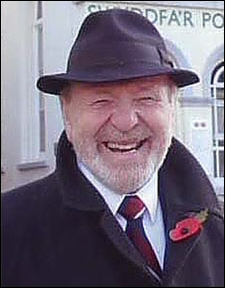
Haines (Robert) (Bobby) |
|
|
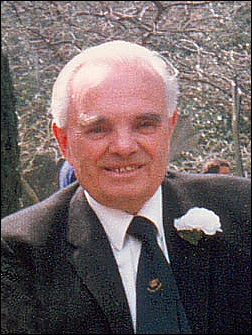
If one were to be asked the question “Who epitomizes a true Caernarfonite?” there is one person that fits the bill in the minds of most local people. “Where can he be found?” Oh walking the streets of his beloved Caernarfon or standing in an advantageous position holding a tray of poppies or paper flags in one hand and a collecting tin in the other, a charismatic smile that speaks volumes and beckons one to dig deep in one’s pocket. “Diolch yn fawr Thank you” and before long there is a queue waiting their turn to contribute towards a good cause. “Who epitomizes a true Caernarfonite?” Who else, but Bobby Haines? Bobby, a retired Local Government Officer, has spent his whole life in the service of others and the number of good causes he has been involved with over the years must be numerous and it would be an impossible task to try and estimate how much money in all he has collected for various organizations. One example, however, occurred in 1976 when a Public Meeting was held with a view to obtaining a Sports and Leisure Centre for the town. The meeting elected the former M.P. Dafydd Wigley as Chairman of a steering committee and Bobby Haines as secretary. Bobby having been a keen sportsman in his younger days was an excellent choice and part of his work was to contact businesses and other organizations asking for contributions to purchase equipment for the Centre. This he carried out with enthusiasm and sent out innumerable letters requesting financial support for the proposed venture and as a result over £25,000 was raised. It is no wonder that his name was put forward to be considered for the Honours List and in 1993 he received the M.B.E. He has been an active member of the Church in Wales for many years and a true Christian in every sense of the word. He has also been elected to both the Town Council and the old Arfon Borough Council and in 1982/83 was Mayor of his native Caernarfon, a position he held with dignity. |
|
Historian / Author |
Hughes (Thomas Meirion) |
|
|
T. Meirion Hughes, born within the old Town Walls on the 29th May 1928 and son of Ellis and Anne Hughes, 9 High Street. He was educated at the Boys School in South Penrallt and Sir Hugh Owen School. He has since served as a junior clerk in the Town Clerk’s office in Caernarfon, spent 3 years in the RAF and worked as a clerk with Shell Mex & B.P. in Victoria Dock. For ten years he was a commercial traveller, before obtaining work as a clerk at Ferodo Ltd., and after a course of study in Bangor Technical College, transferred to the Work Study Department there, eventually becoming a Senior Work Study Engineer. In 1985 he took early retirement and from then on has devoted himself to his interests, which are Welsh literature, poetry and the history of Caernarfon. In 1959, when the National Eisteddfod was held in Caernarfon he was initiated to the Gorsedd of Bards by his minister, The Rev. William Morris, Archdruid. He has won 8 chairs and a crown in Local Eisteddfodau. More recently he has published 5 books on the history of Caernarfon, 1 in Welsh and 1 in English on an explosion which occurred in Cwm y Glo in 1869 when 2 wagons containing nitro glycerine exploded, resulting in new legislation having to be introduced worldwide regarding transportation of explosives. His other three books are bilingual dealing with 1) the cholera epidemic of 1866 in Caernarfon, 2) The history of the 700 year old Ferry Service Caernarfon to Anglesey and 3) The executions at Caernarfon and Beaumaris Jails. Meirion has written articles to both English and Welsh periodicals and has been a columnist for the community paper “Papur Dre” for six years and in July 2008, had an article published in the North American paper “Ninnau a’r Drych” Finally he has been editor of Caernarfon Online’s websites “Cornel Gymraeg” and “Did you Know” for an equal number of years. In 2007 he received The Champion 103fm Toast Award for his contribution to the Welsh Language. “ He also contributed several articles to the two books that were published in the year 2000 to celebrate the new millennium, viz. “Nodweddion mewn Tref Frenhinol/Features in a Royal Town” and “Caernarfon Tre’r Mileniwm/The Millennium Town Caernarfon”. |
|
National Poet |
Huws (Meirion Mackintyre) |
|
|
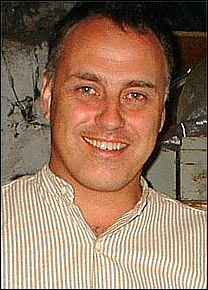
A Celtic name if ever there was one and a name that has brought more than its share of fame to Caernarfon, the home town of this remarkable person who was raised in Cae Mur and educated at Ysgol Santes Helen and Ysgol Syr Hugh Owen. As a young man he trained as an Engineer for the Water Board and at the age of 20 in 1985, through an incident on a bus when returning home from Cardiff after having attended a Welsh Language Society Rally, he had an experience that changed the course of his life. On that bus was a group of young people who held a Welsh poetry contest in strict metre. Meirion regretted not having mastered the intricacies of Cynghanedd in school and was envious of their expertise. With the aid of his then girlfriend and her brother he studied the strict metre and gradually mastered the art. Eight years later he submitted an ode to the Llanelwy 1993 National Eisteddfod and although there were four competitors who were considered worthy of the Chair, two of the three adjudicators were of the opinion that ‘Porth yr Aur’, Meirion’s nomme de plume was the best entry and he was duly chaired bard of the Festival. Not only did he bring fame to his hometown by winning the most coveted prize of the National Eisteddfod, but the winning entry also is in praise of Caernarfon written through the eyes of a 29 year old young person. Meirion is now a self employed designer whose work is in much demand and he has spent a year as Bardd Plant Cymru (Bard of the Children of Wales) which means he visited schools all over Wales to get the children interested in composing Welsh Poetry. Finally, he is also an author of a book “Y Llong Wen” published by Gwasg Carreg Gwalch, which is a fine example of the degree of expertise he has developed in the use of the Cynghanedd to express his innermost thoughts as a poet. |
|
Artist / Teacher |
Jones (William Selwyn) |
|
|
William Selwyn Jones was born in Caernarfon in 1933, and has lived there ever since. Early in his career after completing national service in the Royal Artillery in 1954, he studied at Bangor College, until 1956. He went into teaching, and held art positions at Syr Hugh Owen School and Maesincla Junior School until his retirement in 1990. Since then Selwyn has devoted himself to painting full-time. His paintings are centred on the Landscape of Gwynedd, its farm workers and fishermen. Snowdonia, on his doorstep, has been a constant inspiration with its dramatic mountain passes and ever changing light. Selwyn has exhibited widely in England and Wales, and is an elected member of the Royal Cambrian Academy. In 1998 he won Singer & Friedlander / Sunday Times 11th Watercolour Competition and in 2001 ‘Welsh Artist of the Year’. His works are in the collections of Gwynedd Council, Anglesey County Council, the University of Bangor, the Arts Council of Wales, the National Library of Wales and in many private collections in Britain and abroad.This gives an indication of his increasing popularity and he is fast becoming one of the leading artists not only in Wales but elsewhere. During his time at Ysgol Maesincla Selwyn would work with his students by improving their art skills at an early age. Numerous pupils won in nationally acclaimed competitions throughout the UK. Early on in his career an agreement was made with another great artist in North Wales who shared the same name. To avoid confusion Selwyn always signed his paintings – "William Selwyn" whilst the Llanberis born artist signed as Selwyn Jones. Quote by Sir Kyffin Williams: |
|
Football Manager |
King (John) |
|
|
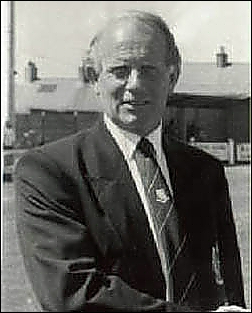
John King brought glory to Caernarfon Town FC, the likes of which the Town had not seen before and have not seen since. In1986/87 the Canaries enjoyed their best ever season when, under manager John King, they defeated Stockport County and York City in the FA Cup, before going out to Second Division Barnsley following a third round replay. Caernarfon finished third in the Northern Premier League for consecutive seasons, arguably their best ever standing. |
|
Weightlifter |
Owen (Ieuan Wyn) |
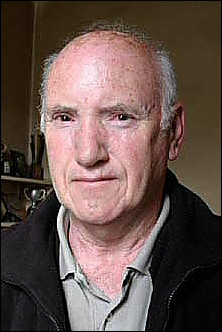 |
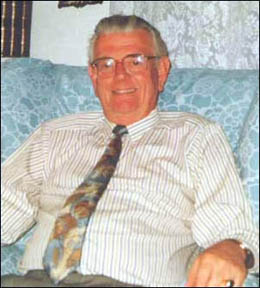
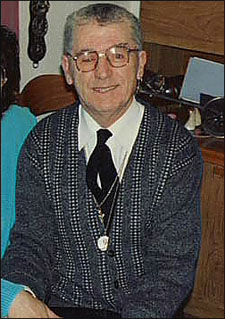
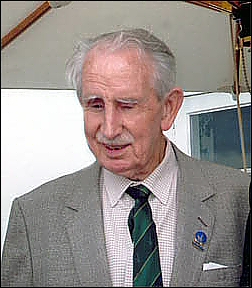
Ieuan Wyn Owen was born on February 12.1941 in number 7, St. Helen’s Terrace, Caernarfon and still lives in the same house. After completing full time education he became an apprentice printer and prior to his retirement a few years ago was employed in the Print Room of the Gwynedd Council Headquarters in Shirehall Street. As a young man he became interested in Weightlifting and began competing and met with considerable success thus bringing fame, not only to himself, but also to his country Wales. From 1960 to 1979, without a break, he was Welsh Champion, 6 times British Champion and 9 times Celtic Champion and was chosen to represent Wales in 5 successive Commonwealth Games viz. 1962, 1966, 1970, 1974 and 1978 and once in the Olympic Games of 1972 in Munich. The Commonwealth Games of 1962 were held at Perth, Australia and Ieuan won a Silver Medal, a Bronze Medal in Kingston, Jamaica in 1966 and 2 further Silver Medals, 1 in Edinburgh in 1970 and 1 in Christchurch, New Zealand in 1974, making a total of 3 Silver Medals and 1 Bronze. He was further honoured by being chosen as Standard Bearer for Wales in 1966 and was appointed Captain of the Welsh team in 1974. When one asks about his medals, Ieuan replies “They are now exhibited in the Welsh National Museum, St. Fagan’s in Cardiff. More people will see them there than under the bed at home.” And as an afterthought “But I still have the Commemorative Medals and they are the same size”. That is a fine example of the modesty and the wit that epitomizes the man. But, what does a former Commonwealth Games multi medallist do with his time now that he is retired? He keeps fit through cycling and still trains in the Club in Llanrug , encouraging and instructing youngsters how to perform the different lifts safely, thus commanding their respect and he is often asked to act as umpire at Weightlifting Competitions here in Wales. He is also active in pursuing his hobby of taking exceptionally good photographs. |
|
Magician |
Parry (Ivor) ROVI |
|
|
Ivor Parry was born c. 1920 in Caernarfon and raised in Thomas Street. Upon leaving full time education he followed many other members of his family to work for the Herald Newspapers in the Brunswick Building on Y Maes, where he remained all his working life. He was forced to retire, as a foreman of the print room, following a serious car accident in the early 1980’s, which left his right arm paralysed. His claim to fame, however, is not associated with his employment, but for the high degree of expertise he attained in what began as a hobby. Ivor, from an early age had become interested in conjuring and started to amaze his friends with his dexterity in manipulating playing cards and performing what can only be called mystifying tricks. It was not long before he was much in demand as an entertainer called ROVI (an anagram of Ivor) and he became a member of the Magic Circle and other relating organizations. He was president of the International Brotherhood of Magicians’ British Ring in 1984/85 and also a member of the Inner Circle and one of the 500 Gold Star medallists worldwide. During his term as president of the Magic Circle in Britain he arranged a convention in the Majestic “Magic in the Mountains” and a good friend of his Paul Daniels attended. Ivor also wrote a book on card tricks called “Rovi Reveals” and he was the first to arrange Welsh examinations for the Magic Circle. Is it, therefore, not fitting that such a man be awarded recognition from the Gorsedd of Bards of the National Eisteddfod of his home country? In 1984 he was initiated as an Ovate of the Green Robe and according to a fellow Cabaret Magician from Bangor, Mr Robert Jones, Rovi confided in him that “the Honour by the Gorsedd of Bards was the highest I have ever been given.” Ivor Parri died following a short illness on June 8. 1996, aged 76, and was cremated on June 13th. Paul Daniels stressed his regret that he could not be present at the funeral as he had a previous engagement in America. |
|
Collector for Charities / Entertainer |
Parry (Richard) Dick |
|
|
Richard Parry was the youngest son of Robert and Mary Parry. Dick, as he is known to his wide circle of friends, started to collect for charity way back in 1952 whilst working at the Y.M.C.A. Most weekends he could be seen out with his flags and stickers, collecting money outside the town's cinemas and later the Empire Bingo. He also went from door to door collecting for such charities as The St. John’s Ambulance, N.S.P.C.C., Cancer Research and the Royal British Legion Poppy Appeal. He also proudly referes to having taken a poppy cross to the South African War Monument on Twthill continuously for 21 years. Many Caernarfon people will remember him for the way he kept the home in Maesbarcer spick and span and looked after his elder brother, Bob, who suffered ill-health for many years and it is doubtful whether he really got over his death, thereafter suffering periods of depression. This was most unlike the extrovert Dick known to all in his native town. Had he not entertained audiences in the town for so many years through cross dressing as one of the Ugly Sisters, Girl Friday or even Carmen Miranda? And was he not the life and soul of parties and carnivals etc? Finally, Dick always remembered those less fortunate and made an effort to visit the town's three hospitals as well as the Retirement homes every Easter and Christmas. He was not only known to sing hymns and carols for them on these occasions, but invariably arrived at Yuletide dressed as Father Christmas Yes, it is doubtful whether we will ever see such a kind hearted Christian as Richard Parry walk the streets of Caernarfon. |
|
Telegraph Pioneer |
Preece (Sir William Henry) |
|
|
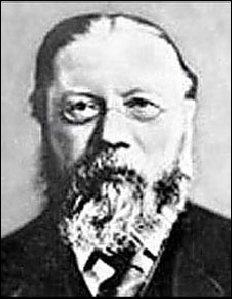
William Henry Preece was the son of a former Mayor of Caernarfon, R M. Preece, Bryn Helen, South Road and he received his early education in the nearby building, now known as Ysgol Jones Bach. However, the founder of the school, J. Hews Bransby, ran the school at that time. At the age of 11, William left Caernarfon and was sent to London for his education. Later the family moved to London, but fortune did not smile on R.M. Preece there and he got into financial difficulties, forcing the family to move to a smaller house and William had to leave King’s College without a degree. His main interest, however, was in the pioneering work of Faraday and Tyndall and he attended lectures by them. He obtained work as a clerk at the Electric Telegraph Company. (E.T.C.) and was later appointed an engineering assistant. After being involved in experiments in transmitting time signals and having worked with Michael Faraday he was promoted Superintendant of the Southern District in Southampton. When the Post Office took over control of the nation’s telegraph service in 1870 William Preece became Engineer in Charge of the Southern District to begin with and later promoted the Post Office’s Chief Engineer. He introduced the electric bell to this country following a visit to Paris. Then after meeting Alexander Graham Bell in America, brought home some telephones in 1877 and had the honour of exhibiting and explaining the system to Queen Victoria. He experimented with telegraph before Marconi was born and successfully sent a wireless message in 1882. When Marconi came to Britain in 1896 he persuaded the Government to support him and was instrumental in setting up the wireless station in Waunfawr only a couple of miles from his home. Retiring in 1899 he moved to Caeathro. The same year he was knighted and made the first ever Freeman of the Borough of Caernarfon. After a busy retirement he died on November 6. 1913, aged 79, and was buried in Llanbeblig Cemetery on November 11. |
|
Airman and Sailor |
Lionel Wilmot Brabazon Rees |
|
|
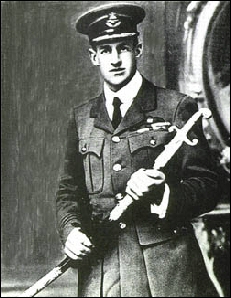
Lionel Wilmot Brabazon Rees was born in Plas Llanwnda, Castle Street, in 1884. His grandfather, James Rees, a native of Carmarthen had come to Caernarfon from London in 1831 as foreman printer for the William Potter Company, who founded the Caernarfon Herald and when Potter retired, James Rees became the new owner. Lionel’s father Charles H. Rees was a solicitor in Caernarfon and held a military rank of Lieutenant Colonel and naturally enough young Lionel also decided on an army career. He was educated at Eastbourne College and the Military Academy in Woolwich. In 1903 he joined the Royal Garrison Artillery and served in the Middle East for many years where he took a keen interest in Geology and Theology. In 1914 he transferred to the Royal Flying Corps, trained as an aviator and became a very successful Air Ace, attaining the rank of Group Captain and was the most decorated airman of WWI, winning the Victoria Cross, the Air Force Cross and the Military Cross. In 1919 he was awarded the O.B.E on the Honours List and later in 1920 his home town honoured him further by making him a Freeman of the Borough of Caernarfon and presented him with a ceremonial sword. Upon his retirement from the RAF some years later he returned to Caernarfon and became a member of the Royal Welsh Yacht Club and regularly sailed in his 12 ton Ketch the “May”. Then in 1933 he felt the need for a new challenge and decided to sail across the Atlantic single handed. He set sail from Porth yr Aur on July 2, 1933, after the Mayor and members of the Council had gone down to the slipway to wish him well. On October 21.1933 the voyage came to an end in Nassau in the Bahamas, and Brabazon Rees attained world renown for his seamanship and was awarded a much coveted prize, “The Blue Water Medal of the Cruising Club of America”. He settled in the Bahamas, married a local girl and died there on September 28. 1955. He never returned to Caernarfon, but his Blue Water Medal has pride of place in his old Yacht Club in Porth yr Aur. |
|
Barrister |
Roddick (Winston) |
|
|
Winston Roddick QC, C.B., LL.B., LL.M. (UCL) has been a Recorder of the Crown Court since 1987. He was born in Caernarfon, educated at Caernarfon Grammar School and University College London, called to the Bar in 1968 and took Silk in 1983. Winston was the first Counsel General to the Welsh Assembly 1998-2003, acting as the senior advisor on all legal issues relating to the Assembly’s powers and was awarded a Companion of the Order of the Bath in the New Year Honours List of 2003/04. He has personal membership of the General Council of the Bar, Bencher of Gray’s Inn 1992 - 1996, Administrative Law Bar Association and the Planning and Environmental Bar Association. He has legal responsibilities here in Wales, being a Member of the Advisory Committee to the Lord Chancellor on Criminal Justice in Wales 2002 - 2003. Also was Chair of the Welsh Law Standing Committee and a Member of that Committee ever since. As Leader of the Wales and Chester Circuit he sits as the Honorary Recorder of Caernarfon. Winston is a Vice President of the University College, Aberystwyth and is one of a select few to have the honour of being made Freeman of the Royal Town of Caernarfon. He is also a Member of the Editorial Board of “Cylchgrawn Cyfraith Cymru”, has served as a Member of the Welsh Language Board and was appointed onto the Independent Television Commission with responsibility for Welsh interests for a four year term from April 1st 1998. A Caernarfon man through and through and, irrespective of his busy work schedule, Winston finds time to visit his family in his home town frequently and keeps in constant touch with what is going on here. Not only does he visit Caernarfon in an official capacity, but he attends other functions such as the unveiling of a plaque in the Social Club of the C.T.F.C. and he is also a sponsor of the Rugby Club. Recently he attended, as Vice President, the Caernarfon Male Voice Choir’s party celebrating its 40 years in existence. When asked to speak, he referred to the Choir’s successes and how he had been moved particularly by the rendering of a poem by the local winner of the National Eisteddfod Chair, Meirion MacKintyre Huws “Mae Caernarfon yn hen / Mae Caernarfon yn hardd” and how well he remembered with nostalgia from the days of his youth some of the places referred to in the poem. Spoken like a true Cofi! |
|
Ex Police Constable |
PC Arthur Rowlands G.M. |
|
|
On
August 2,1961, in the small Mid Wales town of Machynlleth, a 39 year old Police Constable was on duty
near the Pont ar Ddyfi Bridge and was asking questions of passers-by regarding
a spate of crimes that occurred in the area. It was a moonlight night and as he
was moving away from the bridge a deranged man came from the shadows holding a
double barrelled shot gun and fired point blank at him, permanently blinding
him and wounding him in the face and chest. The man was later arrested,
charged, tried and sentenced. |
|
Benefactor |
Turner (Sir Llewelyn) |
|
|
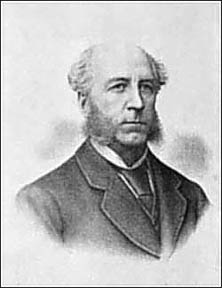
Llewelyn Turner was born in 1823, the 11th and youngest child of William and Jane Turner, Parkia, just over the Llanbeblig parish border in Llanfairisgaer. His father was a Slate Quarry owner, having been invited by Mr. Asshetton Smith of the Faenol to become a partner in the Dinorwig Quarries. Llewelyn became a solicitor and practiced here in Caernarfon, firstly in Market Street and then at No.1 Church Street. He was the owner of a yacht and spent most of his free time sailing and competing in Regattas and at the age of 24 became a founder member of the Royal Welsh Yacht Club in Porth yr Aur and was a Flag Officer of the Club for the remainder of his life. At the age of 36 he became Mayor of Caernarfon and served from 1859 – 1870 and in 1866 was faced with a serious community health problem, a Cholera Epidemic that claimed the lives of nearly 100 inhabitants and another 400 affected. He worked extremely hard as chairman of the Local Health Board and in the company of the Vicar the Rev. James Crawley Vincent visited some of the worst hit areas thus putting themselves at risk of being infected. When the cause was found to be polluted water, the Mayor finally was able to persuade Members of the Council, who had hitherto been reluctant to invest in necessary improvements, to accept a Government loan of £10,000 in order to have a New Water Supply for the Town. In 1868, having been involved as a Harbour Trustee in seeking improvements to the Port of Caernarfon, he laid the foundation stone for the Victoria Dock to accommodate more vessels. At the end of his term of office as Mayor, he was knighted and appointed Deputy Constable of the Castle. This is where he really excelled and mainly through his efforts in raising the necessary funds and with large injections of his own money he was able to renovate the castle from being a ruin into the fine state the edifice is in today. His foresight is undoubtedly that which is responsible for Caernarfon being a World Heritage Centre in this day and age. |
|
Historian / Author |
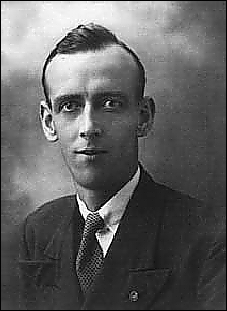
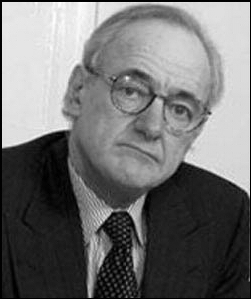
Stewart Whiskin |
|
|
Stewart, as
he was known to all in Caernarfon, was born in 1923, the son of Mr. And Mrs.
W.H. Whiskin, Victoria Street and was educated at the Boys Council and
Segontium Schools. He later became an apprentice plasterer with his uncle Mr.
J.O.Parry, before being called up for service with the Royal Welsh Fusiliers.
He took part in the invasion of Italy and was taken prisoner at Anzio and spent
the remainder of WWII in prison camps in Germany. Saddest hour, the hour of his passing, |
|
Iron Worker by Royal Appointment |
Williams (David John) DJ |
|
|
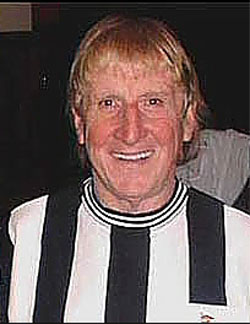
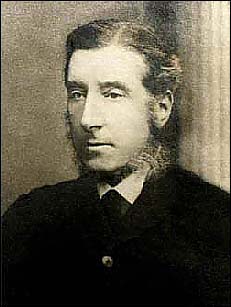
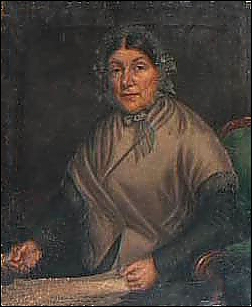
Mr D.J. Williams has a cast iron case of being included in the Caernarfon Hall of fame. (Please excuse the pun) Mr. Williams founded the Brunswick Iron Works over one hundred years ago and during his time at the helm worked for the nobility and also constructed fine ironwork all over the country. Brunswick Ironworks company is still in existence today and is currently run by Meurig Williams, he being the third generation of the Williams family to run the business. The plant has moved to a new location at Peblig after residing at Slate Quay / St Helen's Road for many years. This was due to all the buildings in this area being relocated by the council. |



Listed below are the nominees.
We asked you all to send in your nominees and the list below shows the names we received.
We would like to thank you all for taking part.
Our panel met on19th July 2008 and chose the 20 people (above) who now have a place in the Caernarfon Hall of Fame.
If you think someone should have been listed but are not included on this page, then the reason was because they were not nominated by the public at the time the nominations were asked for.
A big thank you to everyone who participated.
The 60 names below will remain on this page as worthy nominees.
Caernarfon Hall of Fame Nominees - Info
Brabazon Rees Awarded VC medal
Moss Williams Accomplished Artist.
Llewelyn Turner Mayor re built the castle and brought fresh water to the town.
Winston Roddick QC and freeman to the town.
Arthur Jones Mustang Pilot
Ronald Moore Air Gunner
Huw Wheldon TV
Ifor Bowen Griffiths Mayor and councillor
D J Williams Brunswick Iron works by Royal Appointment
W. H. Jones Wrote the book Old Karnarvon Published by Hugh Humphreys
Sir Michael Duff Mayor of Caernarfon, High Sheriff and Lord Lieutenant
Gwilym Cei Undertaker
(Uncle Lofty) William Evans Brought presents to children during the war
Rovi Magician and a member of the Magic Circle
Richard Bonner Pritchard Hired boats in Porth yr Aur
Ken Barton Footballer
Bryan Oritt Footballer
John King Footballer Manager
Will Hughes Teacher
Will Brown Historian
Meirion McKintyre Hughes Esitedfod winner
Eveline Vaughn Davies Hard Church worker
Olga Richards Carnivals and Majorettes
Janet Patchett Carnivals and Majorettes
Tommy Walley Footballer
Ernie Walley Footballer
Haydn Jones Footballer
Harri Parri Reverend
Doris Ann Rowlands Eisteddfod winner
Cled Parry Local Businessman
Gwyn Hughes Jones Local businessman
Griffith Griffiths Trafalgar veteran
Sir William Henry Preece Welsh electrical engineer and inventor.
James Rees Founder of Local paper
Syr Hugh Owen Leading light in education
Hugh Humphreys Printer and Publisher
de Winton Jeffreys Parry Owen Thomas Giant of the engineering world.
Ieuan Owen Weightlifter
Ellen Edwards Teacher of Navigation
Kenrick Evans Local historian
T. Meirion Hughes Local historian and author.
Stewart Whiskin Historian and author
Bobby Haines Fundraiser and Mayor
William Selwyn Jones Artist and Teacher
John Wynne Schoolmaster, author & local historian
John Watts Soldier & Musician
Wyn Davies Footballer
Cledwyn Flynn Hughes Historian
James Roberts (Jim 20) Welsh Guards
Dr Noel Roberts Local doctor
Lloyd George MP for Caernarfon and Prime Minister
Dafydd Wigley MP and forefront in the Plaid Cymru movement
Dick Parry Tireless fund raiser
Richard Morris Jones Councillor former Mayor
Megan Bonner Pritchard First ever Female Mayor
Wayne Phillips Footballer
Ron Kirk Children's theatre
Katherine Owen First female town clerk
John Williams Choir Master
Goronwy Roberts Member of Parliament for Caernarvonshire
P.C. Arthur Rowlands G.M. Blinded in the line of duty.